
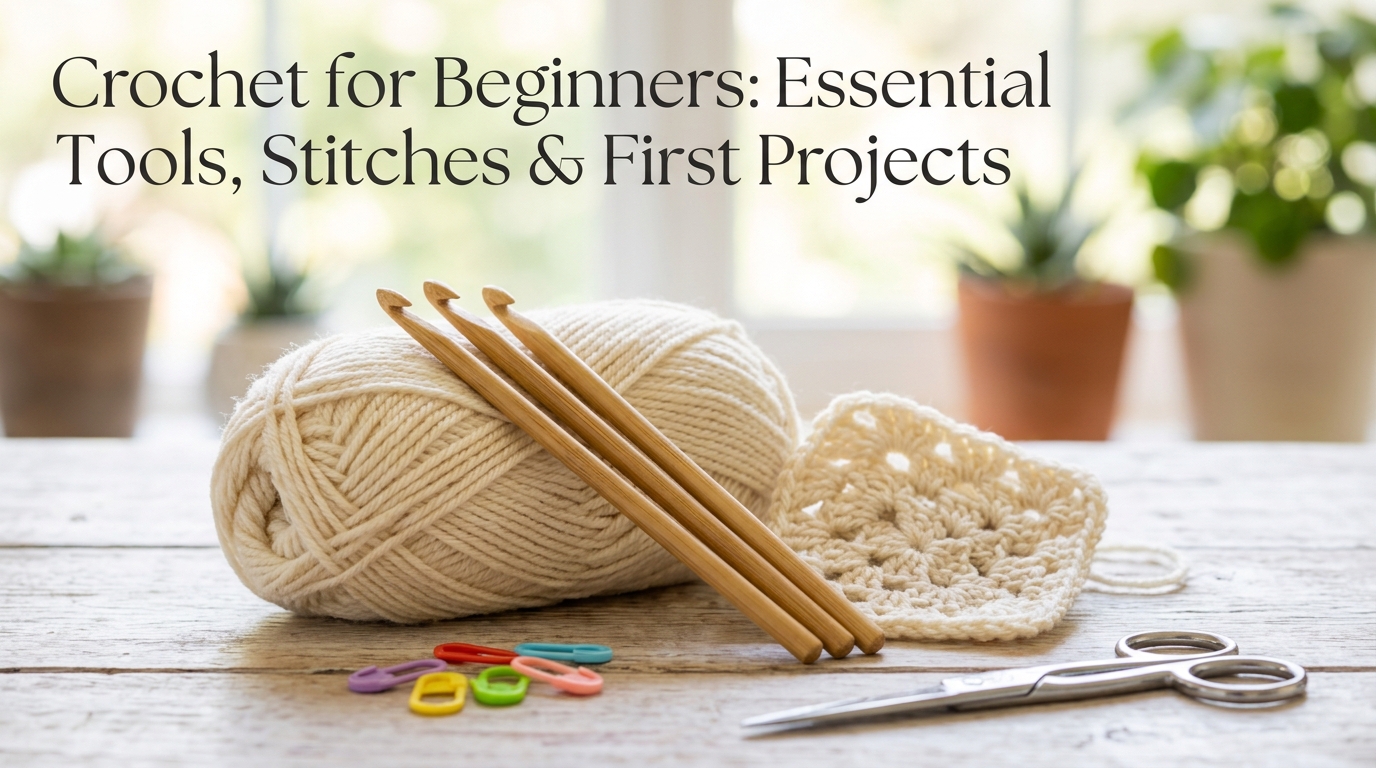
Learning crochet for beginners is a remarkably satisfying craft that turns a single strand of yarn into something truly special. At its heart, this creative technique comes down to making textured fabric by looping yarn together using a single hooked needle. Whether you want to craft cozy blankets, wearable garments, or soft handmade accessories, mastering the basics opens up a world of creative possibilities.
To get started, you do not need an entire room full of craft supplies. You only need a few core materials, along with a couple of handy tools that make learning much easier.
Essential Crochet Tools for Beginners
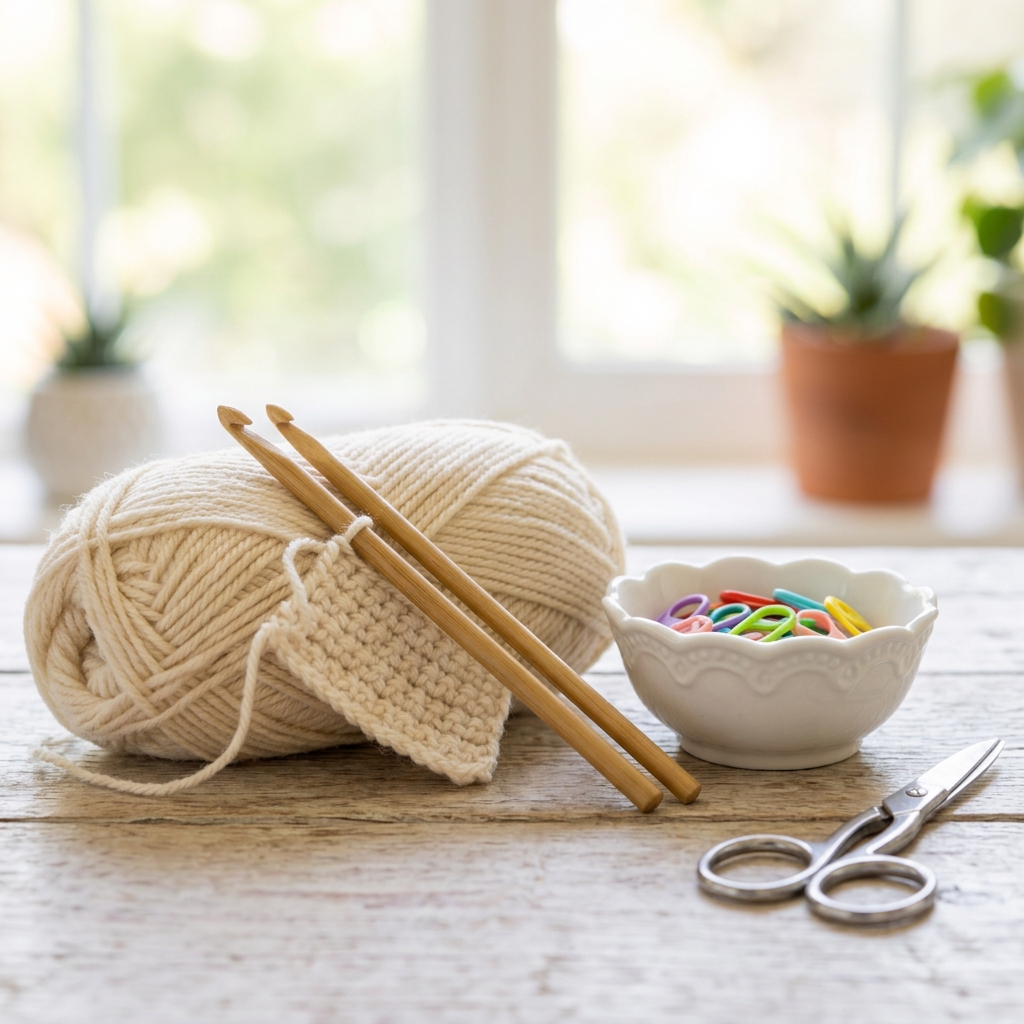
Before starting your first loop, gathering the right starter kit will make your practice smooth and enjoyable:
- Yarn: This is your core material. Yarn comes in a wide variety of weights, textures, and fiber types—ranging from soft acrylics and natural cottons to rich wool blends. As a beginner, choosing a smooth, medium-weight yarn (often labeled as worsted weight or #4) in a light color makes it much easier to see your individual stitches.
- Crochet Hooks: You cannot crochet without a hook, which is used to catch and pull the yarn through loops. Hooks come in many sizes, measured in millimeters (such as 3.0mm, 3.5mm, 4.0mm, 5.0mm, or 6.0mm). The size of your hook determines how loose or tight your stitches will be. Most yarn labels state which hook size pairs best with that specific yarn.
- Stitch Markers: While experienced crocheters might not always rely on them, stitch markers are invaluable when learning crochet for beginners. Functioning much like small, locking safety pins, they mark important stitches and keep your rows straight so your project doesn’t accidentally shrink or grow.
- Tapestry Needle & Scissors: A pair of small, sharp scissors is necessary for cutting yarn, while a blunt-tipped tapestry needle (or yarn needle) allows you to neatly weave in loose ends when you finish a piece.
Fundamental Stitches to Learn First
Every complex crochet pattern is simply a combination of a few basic stitches. Once you get comfortable holding your hook, focus on mastering these foundation techniques:
- Slip Knot & Chain Stitch (ch): The foundation of almost every project. The chain forms the base row that you build your work upon.
- Single Crochet (sc): The simplest and most compact stitch. It creates a tight, dense fabric perfect for coasters, washcloths, and amigurumi (crochet toys).
- Double Crochet (dc): Taller and more open than a single crochet, this stitch works up quickly and is ideal for scarves, blankets, and sweaters.
Simple Projects for Your First Attempt
It can be tempting to jump straight into an intricate cardigan when starting crochet for beginners, but starting small builds confidence and muscle memory.
- Granny Square Coasters: A classic project that teaches you how to work in rounds and practice even tension.
- Basic Dishcloths or Washcloths: Straightforward rectangular pieces that let you repeat the same stitch until it feels natural.
- A Simple Winter Scarf: A rewarding project that reinforces straight edges and consistent stitch counts.
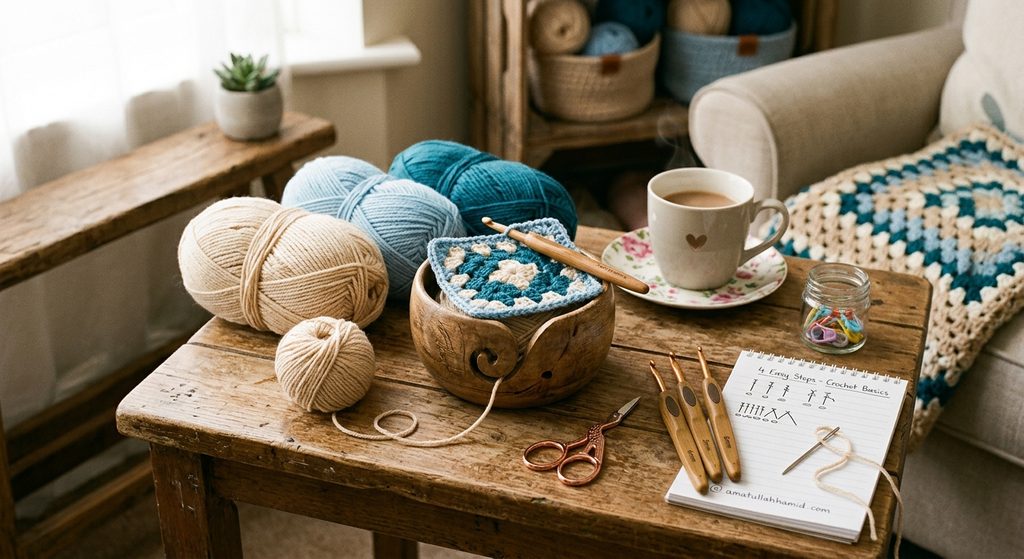
Quick Tips for Success with Crochet for Beginners
- Maintain Comfortable Tension: Hold your yarn gently. Holding it too tightly makes inserting your hook into loops difficult.
- Count Your Stitches: Always count your stitches at the end of each row to prevent accidentally dropping or adding stitches.
- Take Breaks: Hands and fingers can fatigue when forming new muscle memory, so give yourself frequent rest pauses.
Mastering crochet for beginners is a practical, relaxing journey that rewards patience and curiosity. With just a skein of yarn, a hook, and a little bit of practice, you have everything you need to bring your first creation to life.

Leave a Reply